
Autism in Children: Early Signs You Shouldn't Ignore and How to Act in Time
Discover the early signs of autism in children, how to identify them early, and what to do to support their development with appropriate intervention.
3/21/20261 min read
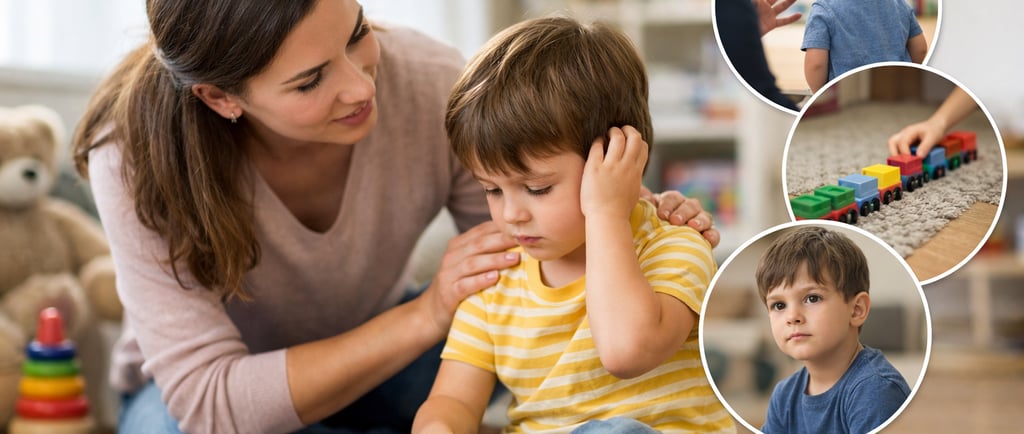
Detecting autism in children early can make a big difference in their development. However, many early signs go unnoticed or are mistaken for normal childhood behaviors.
Understanding what to look for and how to act not only reduces uncertainty but also allows you to provide the right support from the earliest stages.
🔎 What is autism in children?
Autism Spectrum Disorder (ASD) is a neurodevelopmental condition that primarily affects:
Communication
Social interaction
Behavior and the way children process stimuli
Every child is different, which is why we talk about a “spectrum.”
⚠️ Early signs of autism in children
Recognizing early signs is key to acting in time.
👶 In babies (0 to 2 years old):
Limited eye contact
Doesn't respond to their name
Limited facial expression
Doesn't point to objects to share interest
🧒 In young children (2 to 5 years old)
Language delay
Difficulty interacting with other children
Repetitive play
Resistance to changes in routine
🧠 Emotional and behavioral signs
Intense reactions to sounds or stimuli
Difficulty expressing emotions
Preference for solitary activities
What to do if you notice these signs?
Detecting possible signs doesn't mean you have a diagnosis, but it is important to take action.
✔️ Recommended steps:
Consult a pediatrician or specialist
Have a developmental assessment done
Don't wait "to see if it goes away"
Seek early professional guidance
Early intervention can significantly improve a child's development.
🌱 Importance of early intervention
When support begins early, key skills such as the following can be addressed:
Communication
Socialization
Emotional regulation
This increases autonomy and improves long-term quality of life.
A message for families:
Receiving information about autism can be frightening, but it's also an opportunity to act with knowledge.
Supporting a child with autism doesn't mean changing who they are, but rather helping them develop at their own pace, with appropriate tools and support.
Explore
Join us in the adventure of parenting.
Resources
Support
2021 © 2025. All rights reserved.