
Does He/She Feel Me? 7 Signs Your Autistic Child Feels Loved and Secure (A Guide for Parents)
Autistic love speaks in silence. Learn to read the 7 key signs your child feels safe and loved with you, from co-regulation to micro-moments of connection. Find your certainty
1/5/20263 min read
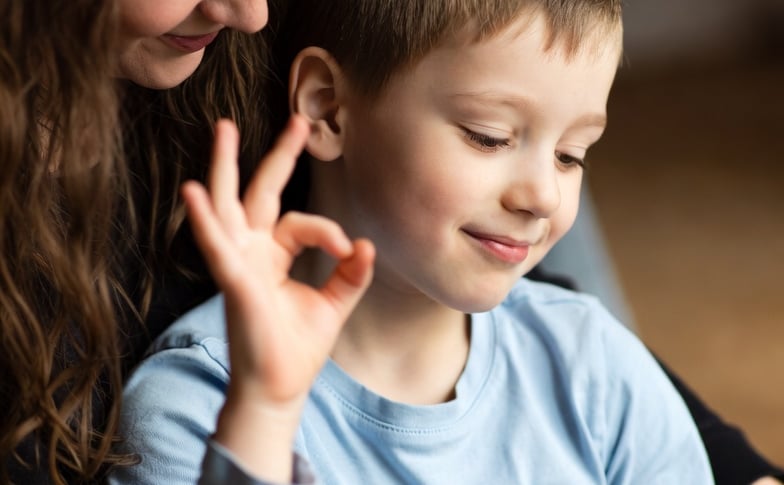
Does your autistic child not say "I love you" or avoid hugs? As a parent, it's normal to wonder if your affection is reaching their heart. The good news is that affection in autism is communicated differently, through a nonverbal language you can learn to read. This article deciphers the 7 concrete signs of emotional connection and secure attachment that show your child not only needs you but feels deeply loved and protected by your side. Leave doubt behind and discover how your love is building an unbreakable bond.
Sign 1: You Are Their Emotional Regulator and Safe Harbor
What you see: In situations of sensory overload (loud noises, crowds) or stress, your child physically approaches you. They may stand beside you, sit at your feet, or enter the room you are in. They don't always seek contact; they seek proximity to you.
🔍 What it means (and why it's love): In terms of attachment and regulation in autistic children, you are their "secure base." Their nervous system identifies your presence as a calming factor, an antidote to chaos. It's the highest expression of trust adapted to their neurology. This is a key sign of emotional security in TEA.
Sign 2: They Invite You Into Their Inner World (Shares Intense Interests)
What you see: They bring you their favorite rock, guide you to watch the washing machine spin, or insist you watch the same dinosaur video for the tenth time. It's not a meaningless monologue.
🔍 What it means (and why it's love): Their restricted interests are their safe territory and greatest passion. By sharing them with you, they are offering you the key to their internal universe. This is one of the most significant connection behaviors in autism and a display of deep love. It's their way of saying: "You are important to my world."
Sign 3: They Tolerate and Accept Your Presence in Their Personal Space
What you see: They are immersed in repetitive play (lining up cars, spinning objects). You enter, sit quietly at a respectful distance. They don't get upset or ask you to leave. They allow you to share their bubble without social demands.
🔍 What it means (and why it's love): For many autistic people, solitude is a need. The fact that they allow you to invade that space without anxiety indicates an extraordinary level of comfort and trust. It is a nonverbal sign of affection and security that says: "Your silent company is part of my peace, not an intrusion."
Sign 4: Their Anxiety Level Visibly Decreases With You
What you see: In a new or stressful environment, you compare. With others, their body is tense, they stim quickly (flapping, rocking). With you, you notice their breathing is deeper, their movements are slower, or their body is slightly more relaxed.
🔍 What it means (and why it's love): Secure love isn't always expressed with actions, but with the absence of fear. A measurable decrease in stress in your presence is neurophysiological proof that your bond acts as an anxiety regulator in autism. You are their anchor.
Sign 5: They Communicate With You Effectively and Directly
What you see: They take your hand to lead you to what they need, hand you the "water" pictogram, or use a specific word/key only with you. They direct their communicative efforts towards you.
🔍 What it means (and why it's love): Communication requires great effort for them. When they use their resources to communicate specifically with you, they are choosing you as their bridge to the world. It is an act of affective dependence and practical trust. It's their way of saying: "You are my go-to person."
Sign 6: They React to Your Absence (Separation Protest)
What you see: When you leave (even to another room), they become unsettled. They may stay by the door, increase repetitive behaviors, or search for/ask about you using their means.
🔍 What it means (and why it's love): In developmental psychology, "separation protest" is a key indicator of attachment. The fact that your absence is noticeable and causes them unease confirms that you are a primary and significant attachment figure in their life. Their world is incomplete without you.
Sign 7: Micro-moments of Synchrony and Attunement Appear
What you see: They laugh a second after you do. They copy a gesture of yours days later (like scratching your nose). In a moment of genuine joy, their gaze briefly meets yours.
🔍 What it means (and why it's love): These are the most valuable "connection sprouts." They are neurological indicators of affective synchrony and co-regulation, spontaneous and authentic. They are clear evidence of emotional connection in non-verbal children and the purest proof that they are in sync with you.
Conclusion: Love is Cultivated in a Garden with Another Language
The bond with an autistic child doesn't follow a neurotypical script. It is cultivated in a garden with its own language, where love is measured by security, shared regulation, and peace, not just by words or hugs.
Your task is not to force a type of affection, but to become an expert in their language of love. Each of these 7 signs is a flower in that unique garden. Recognizing them will give you the certainty and emotional strength to continue being that unshakable safe harbor your child needs to flourish.
Explore
Join us in the adventure of parenting.
Resources
Support
2021 © 2025. All rights reserved.